← Saju Journal
6 min read
Saju vs. Western Astrology: What's Actually Different
Both read your birth moment — but Korean saju and Western astrology disagree on almost everything else: the sky vs. the calendar, 12 signs vs. 518,400 charts, planets vs. elements. A practical comparison.
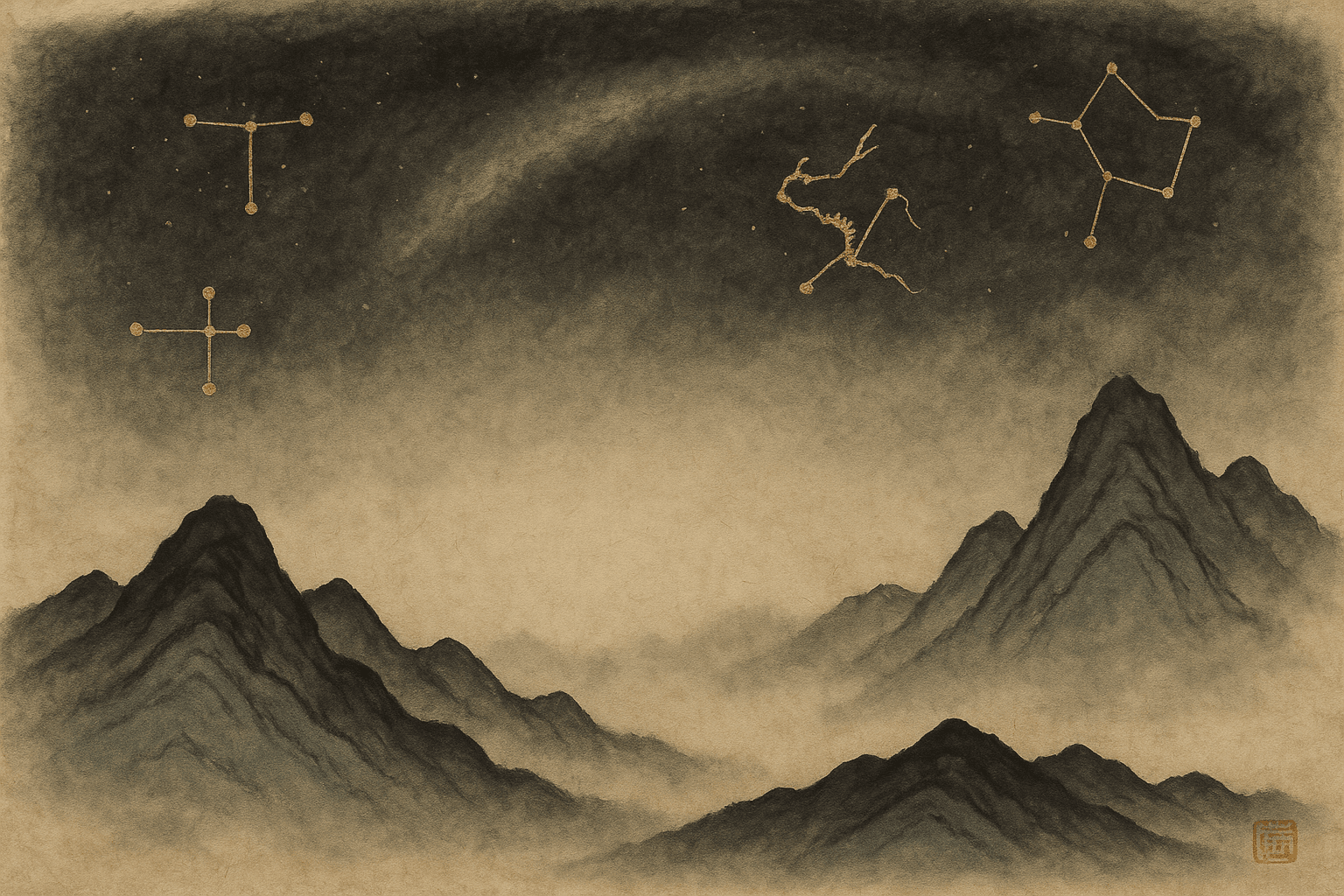
Two systems, one question
Western astrology and Korean saju (사주) both start from the same audacious idea: the moment you were born says something durable about who you are. From there, they part ways almost completely.
Western astrology looks up — it maps where the sun, moon, and planets sat against the zodiac at your birth. Saju looks at time itself: it encodes your birth year, month, day, and hour into eight characters drawn from a 60-unit calendar cycle that Korea has used for over a millennium.
12 signs vs. 518,400 charts
Ask someone their sign and you've sorted them into one of 12 buckets. A saju chart works differently: with 60 possible year pillars, 12 months, 60 day pillars, and 12 hour branches, the combinations run past half a million before you even weigh how the eight characters interact.
This is why saju readings feel oddly specific where sun-sign horoscopes feel general. Two people born in the same month get the same Western sun sign — but almost never the same saju.
Planets vs. the five elements
Where astrology reasons through planets — Mercury for communication, Venus for love — saju reasons through five elements: Wood, Fire, Earth, Metal, and Water. Every one of your eight characters carries an element, and the BALANCE among them is the reading.
Too much Fire with no Wood to feed it reads as brilliance that burns out; abundant Water with no Earth to bank it reads as talent that never settles. The vocabulary is different, but the goal is the same: a structural picture of how your energy moves.
Fate vs. weather
The biggest misconception about saju is that it's fatalistic. Korean tradition treats a chart less like a verdict and more like a climate report: your chart is the terrain you were given, and the decade and yearly cycles moving across it are the weather.
A good reading never says what WILL happen. It says which seasons favor planting and which favor harvest — timing intelligence, not prophecy. That's also why Koreans re-read their saju every new year rather than once in a lifetime.