← साजू जर्नल
6 मिनट पढ़ें
Saju vs. Western Astrology: What's Actually Different
Two traditions interpret birth details through different symbols: planetary positions and calendar pillars. Explore the differences, and why a more detailed chart does not establish predictive accuracy.
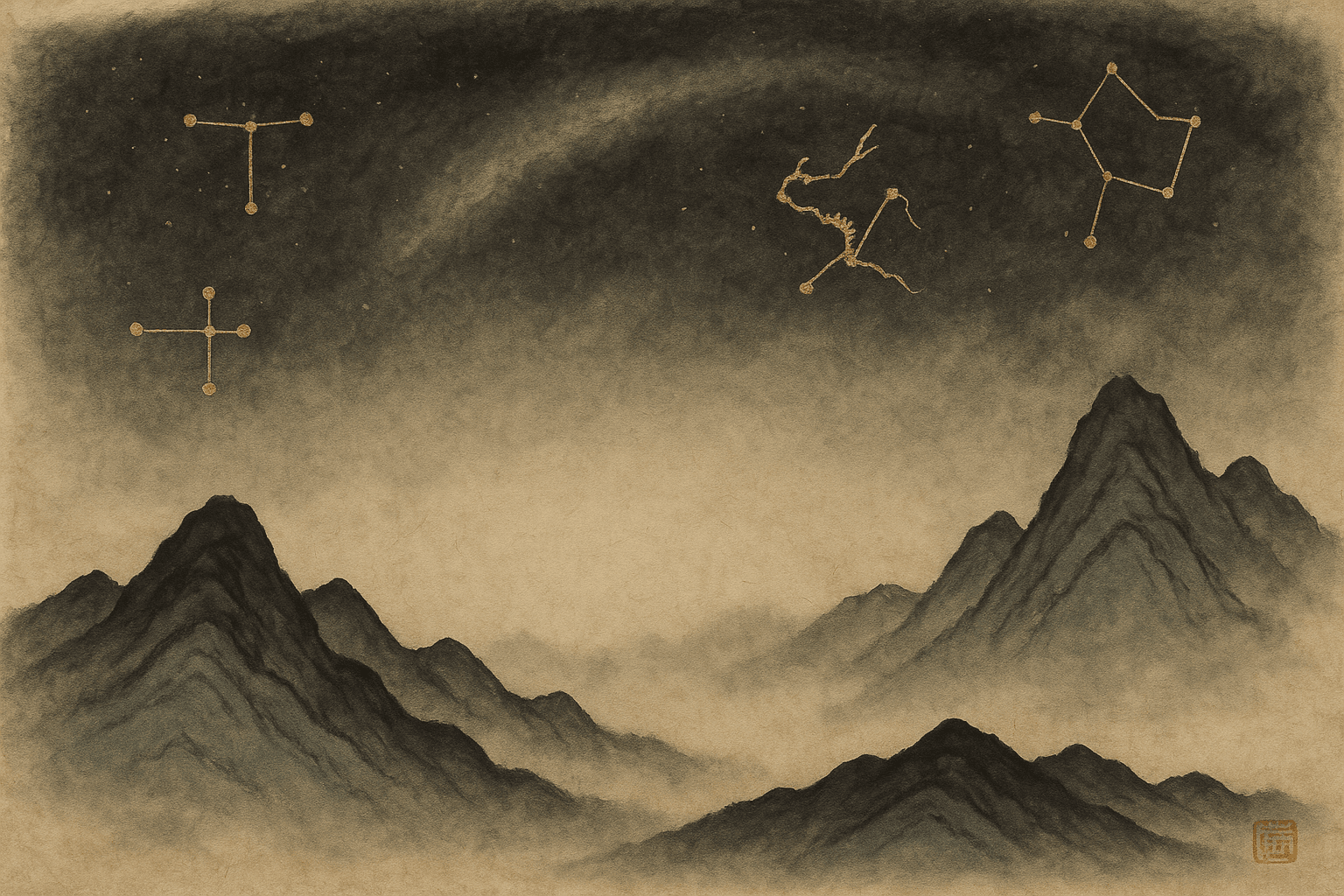
Two systems, one question
Western astrology and Korean saju (사주) both start from the same audacious idea: the moment you were born says something durable about who you are. From there, they part ways almost completely.
Western astrology looks up — it maps where the sun, moon, and planets sat against the zodiac at your birth. Saju looks at time itself: it encodes your birth year, month, day, and hour into eight characters drawn from a 60-unit calendar cycle that Korea has used for over a millennium.
Chart detail and predictive accuracy
Comparing a full Saju chart with a single sun-sign label mixes different levels of detail. Western birth charts also use information beyond the sun sign, while Saju combines the year, month, day and hour pillars.
More combinations can create more varied descriptions. That does not establish that either tradition accurately measures personality or predicts future events. A reading that feels specific is an experience to reflect on, not independent evidence of its claims.
Planets vs. the five elements
Where astrology reasons through planets — Mercury for communication, Venus for love — saju reasons through five elements: Wood, Fire, Earth, Metal, and Water. Every one of your eight characters carries an element, and the BALANCE among them is the reading.
Too much Fire with no Wood to feed it reads as brilliance that burns out; abundant Water with no Earth to bank it reads as talent that never settles. The vocabulary is different, but the goal is the same: a structural picture of how your energy moves.
Fate vs. weather
A weather metaphor can help explain the traditional language of decade and yearly cycles. It is a metaphor for interpretation, not a claim that Saju has the forecasting evidence of meteorology.
SeoulOracle presents these cycles as prompts for reflection and personal choice. Use real circumstances and appropriate evidence when making important decisions; no chart guarantees an outcome.